-
-
Chickmagaluru, Karnataka, India 577101
A Bus Ride That Took Me Back to My Childhood
Education
A Bus Ride That Took Me Back to My Childhood
Nov 19, 2026 | 3 views
One ordinary journey, one teacher’s quiet act of kindness, and a powerful reminder that every child deserves the opportunity to discover their potential.
Impact Story | Education & Opportunity
An Ordinary Journey, An Unforgettable Moment
Some experiences in life stay with us long after the moment has passed. They may not involve extraordinary events or dramatic changes, yet they leave us reflecting on things we often overlook in our everyday lives. One such experience happened to me during an ordinary bus journey.
As I travelled on the bus, I noticed a young boy, probably studying in Class 6 or 7, who was returning towards his village. At first, there was nothing particularly unusual about the scene. He was simply a schoolboy travelling home, like countless other children who make the same journey every day. But soon, I noticed that he did not have enough money for his bus fare. His teacher, who was travelling with him, noticed the situation too.
What happened next was a small act of kindness, but it left a lasting impression on me.
A Teacher's Quiet Act of Kindness
Without making the boy feel uncomfortable, his teacher offered him money to pay for the journey. The boy appeared shy and hesitant. He repeatedly refused to accept the money, perhaps because he felt uncomfortable receiving it. But the teacher gently insisted, making sure the boy would not have to worry about getting home. He even asked him to keep some extra money for the return journey.
There was no announcement, no expectation of appreciation and no audience to witness the gesture. The teacher simply recognised a student's difficulty and did what he could to help. He did not turn the situation into a lesson about poverty or make the boy feel small because he needed assistance. He responded with understanding and quiet dignity.
Watching this interaction, I realised that kindness does not always require significant resources or extraordinary effort. Sometimes, it begins with noticing what someone else might overlook and responding with compassion. For that teacher, it may have been just a few minutes of his day. For the boy, it may have been a moment of relief and reassurance that someone was looking out for him.
Sometimes, the smallest acts of kindness leave the deepest impressions because they remind us that we are seen, valued and not alone.
A Moment That Took Me Back to My Childhood
As I watched the teacher and the young boy, my thoughts travelled back to my own childhood. I remembered the school days, the classrooms, the teachers and the many little experiences that gradually shape the way we see the world. Childhood is a period of learning, curiosity and discovery, but it is also a time when even a small gesture of encouragement can have a lasting influence.
A child may forget many lessons from a textbook, but the feeling of being understood by a teacher can stay with them for years. A few words of encouragement, a helping hand during a difficult moment or someone taking the time to recognise their efforts can build confidence in ways we may never fully understand.
That bus journey reminded me of the important role teachers play beyond the classroom. They do not simply explain subjects or prepare students for examinations. At their best, they help children navigate challenges, develop confidence and recognise that their circumstances do not have to define their future.
But the moment also led me to a much bigger question: how many children are growing up with potential that has never been recognised simply because they have not had the right opportunities to discover it?
Talent Is Everywhere, but Opportunity Is Not
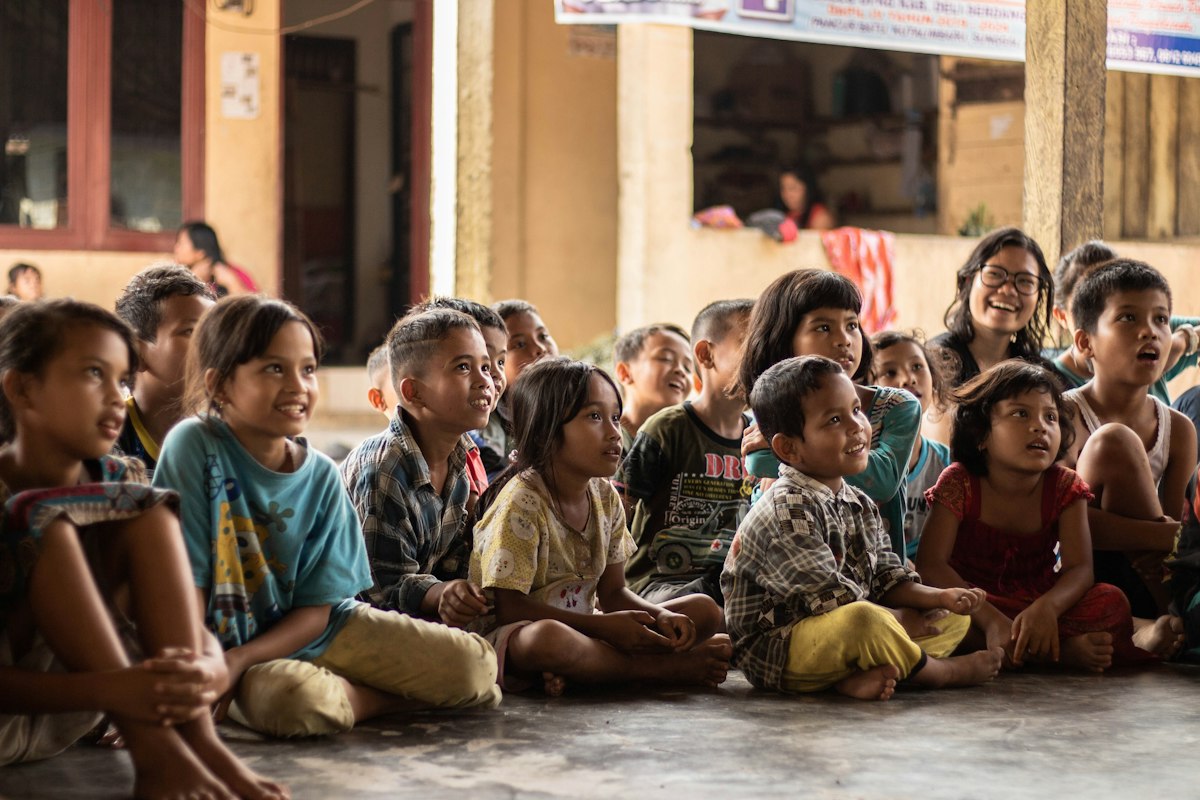
Across rural India, children attend schools with different family backgrounds, resources and levels of exposure. Some grow up surrounded by books, technology, extracurricular activities, mentors and opportunities to explore their interests. Others may have limited access to learning materials, digital resources, guidance or experiences beyond their immediate surroundings.
Yet every classroom brings together children with different abilities, interests and possibilities. A child who struggles with one subject may have an extraordinary imagination. Another may possess a natural ability to solve problems, create things, communicate ideas or lead others. Some may have a deep interest in science, art, sports or technology without ever having the opportunity to explore those interests meaningfully.
Potential does not always appear in examination results. It does not always reveal itself through high marks or confident participation in a classroom. Sometimes, it remains hidden behind shyness, limited exposure or a lack of encouragement. A child may never discover an interest simply because nobody introduced them to it. Another may have the ability to excel in a particular field but never meet someone who can guide them in that direction.
This is why access to schooling, although essential, is only one part of education. Children also need opportunities to explore, experiment, ask questions, develop practical skills and understand the possibilities that exist beyond their immediate environment.
Talent can exist anywhere, regardless of a child's background. But without access, encouragement and exposure, that talent may never get the chance to grow.
The Difference One Teacher Can Make
The teacher I saw on the bus reminded me that education is ultimately about people, not just books or examinations. A good teacher often notices things that others miss. They recognise when a student is struggling, encourage a child who has lost confidence and create an environment in which asking for help does not become a source of shame.
The teacher's gesture was not a grand intervention. He did not solve every difficulty the boy might face in life. He simply addressed the immediate problem in front of him with kindness and consideration. Yet that response reflected an important quality of education: the ability to see a student as a human being whose dignity matters.
We often speak about educational infrastructure, school facilities, curriculum and academic performance. All of these are important. But we should also remember the human relationships that make learning meaningful. A child who feels supported may be more willing to ask questions, attempt something difficult and believe that their efforts matter.
We may never know exactly how that young boy will remember the incident. What matters is that the teacher chose to respond with empathy rather than indifference. It was a simple reminder that the influence of a teacher can extend far beyond the classroom walls.
Education Must Help Children Discover What They Can Become
At Hanfi Foundation, this experience reinforced an important question at the heart of our work in education: are we only helping children access learning, or are we also helping them discover their potential?
A child deserves more than the opportunity to sit in a classroom. They deserve access to books that encourage curiosity, learning experiences that broaden their understanding, technology that opens new possibilities and guidance that helps them recognise their strengths. They deserve the chance to develop skills, explore interests and imagine a future beyond the limitations of their present circumstances.
This belief is closely connected to the purpose of our Ride2Read initiative, through which we work towards making learning resources and educational opportunities more accessible to children in underserved communities. We believe that access to books, engaging learning activities and meaningful educational exposure can help children develop curiosity and confidence. Every child may not follow the same path, but every child should have a fair chance to explore the path that suits their abilities and aspirations.
Our vision of education goes beyond helping a child pass an examination. It is about creating an environment where children can ask questions, discover interests, develop practical abilities and understand that their future can hold possibilities they may not yet have imagined.
Education should not simply help children learn about the world. It should help them discover their place and potential within it.
Imagine the Possibilities We Have Yet to Discover
Imagine a child from a small village discovering a passion for science because someone placed the right book in their hands. Imagine another child developing an interest in computers because they were given the opportunity to explore technology for the first time. Imagine a quiet student discovering confidence through art, a practical activity, a sports opportunity or the encouragement of a mentor.
These experiences may seem small at the beginning, but they can open doors to new interests and possibilities. A book can introduce an unfamiliar idea. A mentor can help a child understand how to develop a skill. An educational activity can reveal an ability that had remained unnoticed. An opportunity to participate in a competition or collaborative project can help a child gain confidence in their own capabilities.
We cannot predict what every child will become, nor should we decide their future for them. Our responsibility is to help ensure that their circumstances do not unnecessarily restrict what they can explore and achieve. When children have access to learning, guidance and encouragement, they have a better chance of discovering what interests them and developing the abilities needed to pursue it.
This is the kind of educational environment we want to contribute towards: one where a child's birthplace or family income does not determine how much they get to learn about themselves and the world around them.
Why This Moment Matters to Hanfi Foundation
The bus journey eventually continued, and the ordinary rhythm of the day resumed. The boy had the help he needed for his journey, and the teacher continued with his day. For them, it may have been a brief interaction that required no further thought. For me, however, it became a reminder of why access, dignity and opportunity matter so deeply in the lives of children.
At Hanfi Foundation, we believe that every child deserves the chance to learn, grow and develop their abilities. Our work in education is driven by the understanding that children do not all begin with the same resources or exposure, but their circumstances should not be allowed to define the limits of their potential.
Through initiatives such as Ride2Read, we want to contribute towards closing some of these gaps by bringing educational resources and meaningful learning experiences closer to children who may otherwise have limited access to them. This work is not only about reaching more children; it is also about making their learning experiences valuable, engaging and connected to their future possibilities.
We recognise that discovering a child's potential is a continuing process that requires patience, support and collaboration. Teachers, families, communities and organisations all have a role to play. By working together, we can help create environments where children feel encouraged to learn, explore their interests and build confidence in their abilities.
Our aim is simple: to help make educational opportunity more accessible, so that fewer children miss the chance to discover what they are capable of becoming.
The Bus Ride Ended, but the Thought Stayed With Me
When I think back to that journey, I do not remember it merely as a moment when a teacher helped a student pay for a bus ticket. I remember it as a reminder that meaningful change often begins with paying attention. The teacher noticed a difficulty and responded. He understood that a small amount of money could make a difference at that moment, and he helped without compromising the child's dignity.
That experience also reminded me that children need different kinds of support at different stages of their lives. Sometimes, they need help overcoming an immediate difficulty. Sometimes, they need a teacher who believes in them, a book that introduces them to a new idea or an opportunity to explore an ability they never knew they possessed. Our responsibility is to recognise those needs and respond in ways that help children move forward.
I do not know where that young boy will be ten years from now. Perhaps he will become an engineer, a teacher, an entrepreneur, an artist or something none of us can imagine today. The purpose of education is not to choose that future for him. It is to give him the opportunity to discover it for himself.
Every child carries possibilities that the world has not yet seen. Our responsibility is to help create the conditions in which those possibilities can emerge.
That bus ride took me back to my childhood, but it also brought me back to a belief that continues to guide our work: no child's potential should remain undiscovered simply because opportunity was out of reach.
At Hanfi Foundation, we want to contribute towards a future where children are not defined by where they are born, but encouraged by what they can learn, discover and become. Because when we invest in a child's opportunity to grow, we invest in the future of families, communities and society itself.
Talent is everywhere. Opportunity must reach everywhere, too.
Humanity • Hope • ActionHanfi Foundation — Building a Better Tomorrow, For Every Life.
Leave a Comment
Recent Posts
She Wasn't Asking for Help. She Was Asking fo...
Nov 19, 2026
Some Teachers Teach Subjects. Some Teachers T...
Nov 19, 2026
Comments (0)
No comments approved for this post yet. Be the first to share your thoughts!